 Dr. Sasikumar Muthu
Consulting surgeon
MBBS, MS (General Surgery), M.Ch (Plastic & Reconstructive Surgery)
Dr. Sasikumar Muthu
Consulting surgeon
MBBS, MS (General Surgery), M.Ch (Plastic & Reconstructive Surgery)
Private consultation — Coimbatore & Chennai
You can't train away glandular tissue.
Gynecomastia is real breast tissue, not a fitness failure. It doesn't respond to dieting, cardio or years in the gym — surgery is the only thing that removes it.
-
Day-care surgery
Walk in and go home the same day. No overnight admission.
-
Surgeon-led
Assessed by a qualified plastic surgeon, not a counsellor.
-
Private by default
No waiting-room exposure. Details stay with the surgical team.
The grading scale
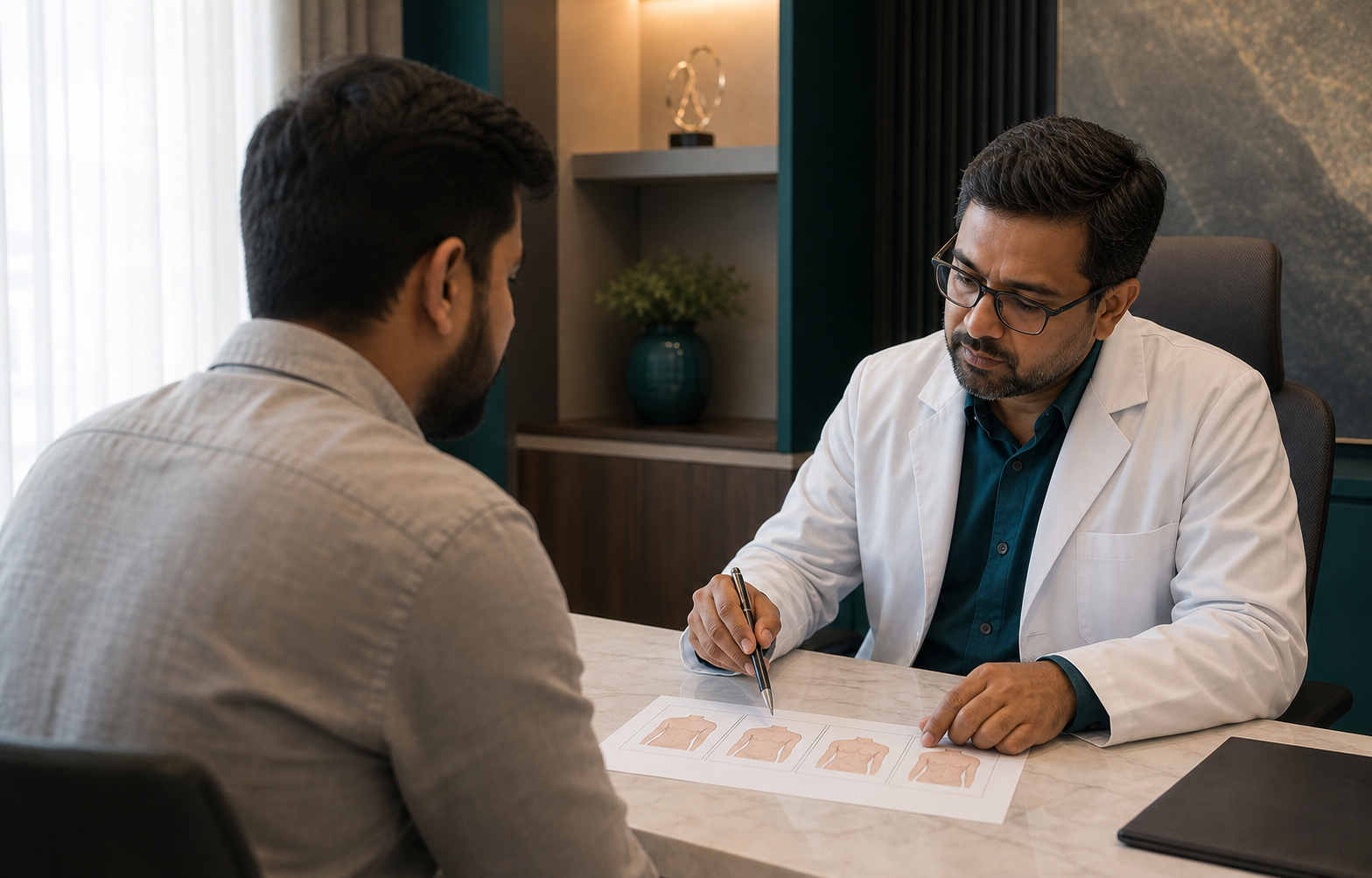
Four grades. Different operations.
Surgeons grade gynecomastia by how much tissue is present and how far the skin has stretched. The grade decides whether a case needs liposuction alone, gland excision, or skin tightening as well — which is why it is the first thing anyone will ask you.
Not sure which one you are? Most men aren't — the grade is confirmed by examination, not by looking in a mirror.
Send my grade for reviewThe treatment journey
From first consultation to final review.
Six stages, each one explained before it happens. Nothing is booked, charged or decided until you have seen what the stage before it involves.
The first consultation is about clarity, not pressure.
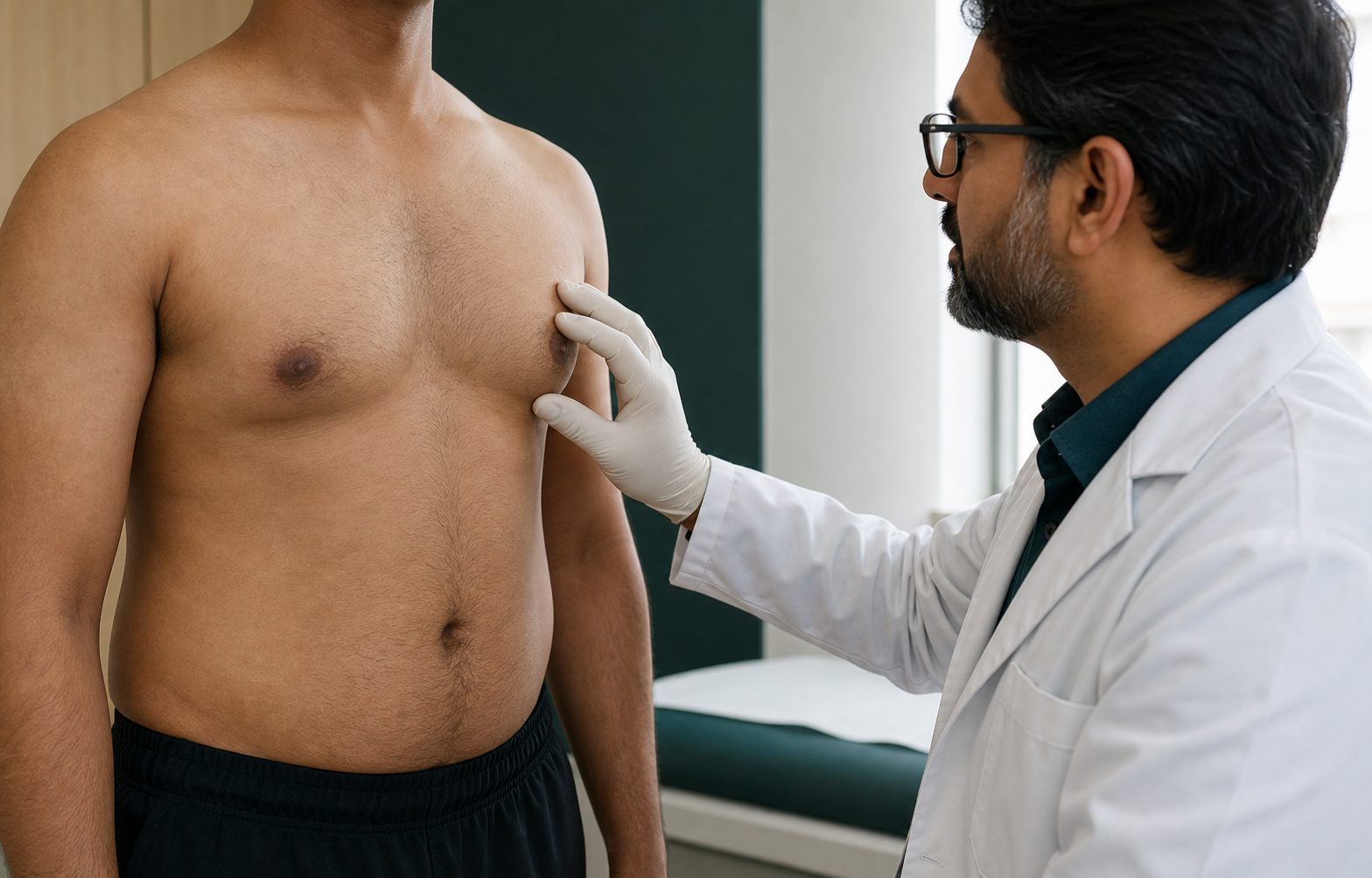
The surgeon examines the chest, identifies the likely grade and explains which treatments actually apply to you. You are told plainly whether surgery is the right answer — including when it isn't.
Dr. Sasikumar Muthu
Consulting surgeon
MBBS, MS (General Surgery), M.Ch (Plastic & Reconstructive Surgery)
 Dr. Vikram Kumar
Consulting surgeon
MBBS, MS (General Surgery), M.Ch (Plastic Surgery), PG Diploma Aes. Surgery
Dr. Vikram Kumar
Consulting surgeon
MBBS, MS (General Surgery), M.Ch (Plastic Surgery), PG Diploma Aes. Surgery
What it covers
- 01Chest and gland assessment, by hand, in person.
- 02Your grade, and the technique that grade calls for.
- 03Blood work to rule out a hormonal or medication cause.
- 04Questions, cost and what happens next — no commitment.
Clear information builds confidence.
What gynecomastia actually is, which common beliefs to discard, the risks that genuinely apply, and the likely cost — all before any commitment is made.
What gets covered
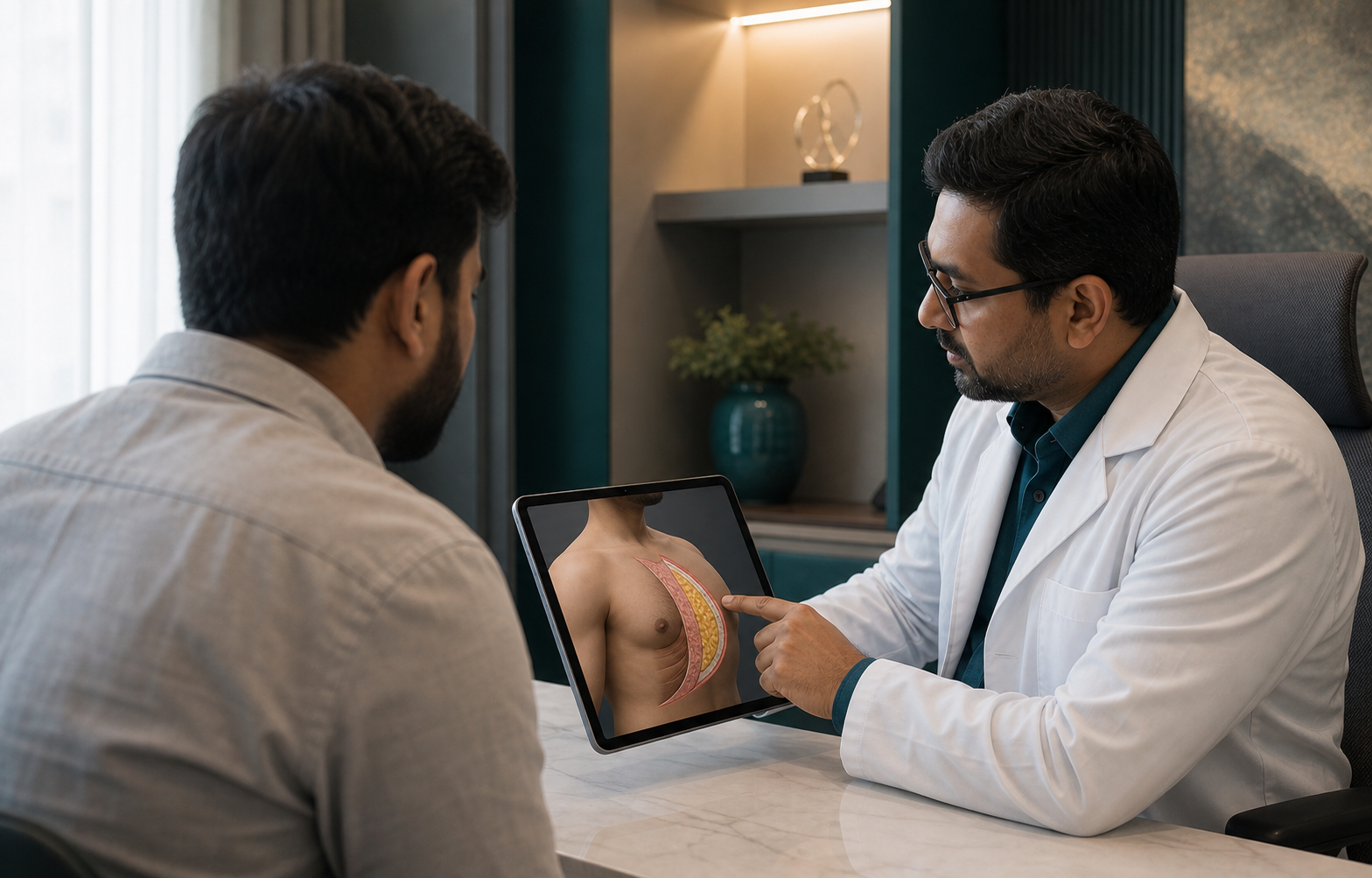
- 01Gland versus fat, and why the difference decides the technique.
- 02The five risks discussed before every procedure.
- 03Indicative cost for the selected grade: ₹75,000–₹1,25,000, with the final quote confirmed after examination.
- 04Follow-up consultations at no additional charge.
Preparation is individual, not a fixed checklist.
Tests are selected for your health and your procedure. Medicines are reviewed rather than stopped, and the instructions you get are yours — not a generic handout.
Before the date
- 01Blood tests chosen for your history — not every listed test.
- 02Medicine review. Never stop a prescription unprompted.
- 03Fasting plan, arrival time and transport confirmed.
- 04Come with a responsible adult who can take you home.
From arrival to safe discharge, inside a day.
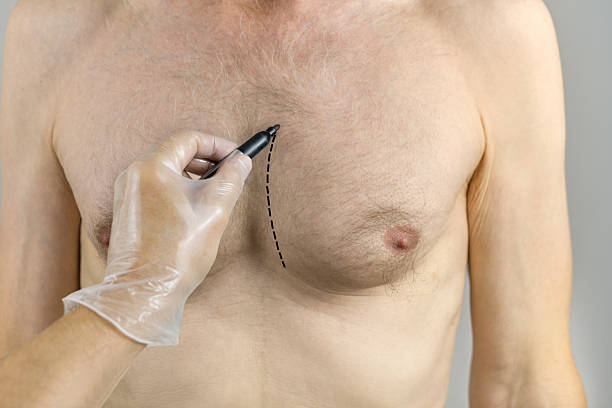
Markings are drawn while you are standing, because the chest changes shape the moment you lie down. That is the difference between a chest that looks flat on a table and one that looks flat in a mirror.
On the day
- 01Marking and consent, taken standing.
- 02Anaesthesia, with monitoring throughout.
- 03Gland and fat removed through small incisions.
- 04Discharge judged on readiness, not on the clock.
Healing is gradual, and the contour keeps improving.
Swelling settles over the first six weeks; the final shape appears over several months. Activity returns in stages, and only on your surgeon's clearance.
How it progresses
- WK 1Rest, short walks, compression garment worn continuously.
- WK 2Desk work and normal daily movement, if comfort allows.
- MO 1Light cardio and scar care, on clearance.
- MO 3Gym progression and a first review of the result.
Follow-up protects healing and helps the result mature.
Scheduled reviews track healing, and photographs document the change over months rather than days. Most of what you are judging at six weeks is still swelling.
Afterwards
- 01Scheduled reviews through the first months.
- 02Photo-based tele-review between visits.
- 03Scar care guidance as the scar settles.
- 04A documented before-and-after record of your own.
Stage 1 of 6 — Consultation
From the surgeon
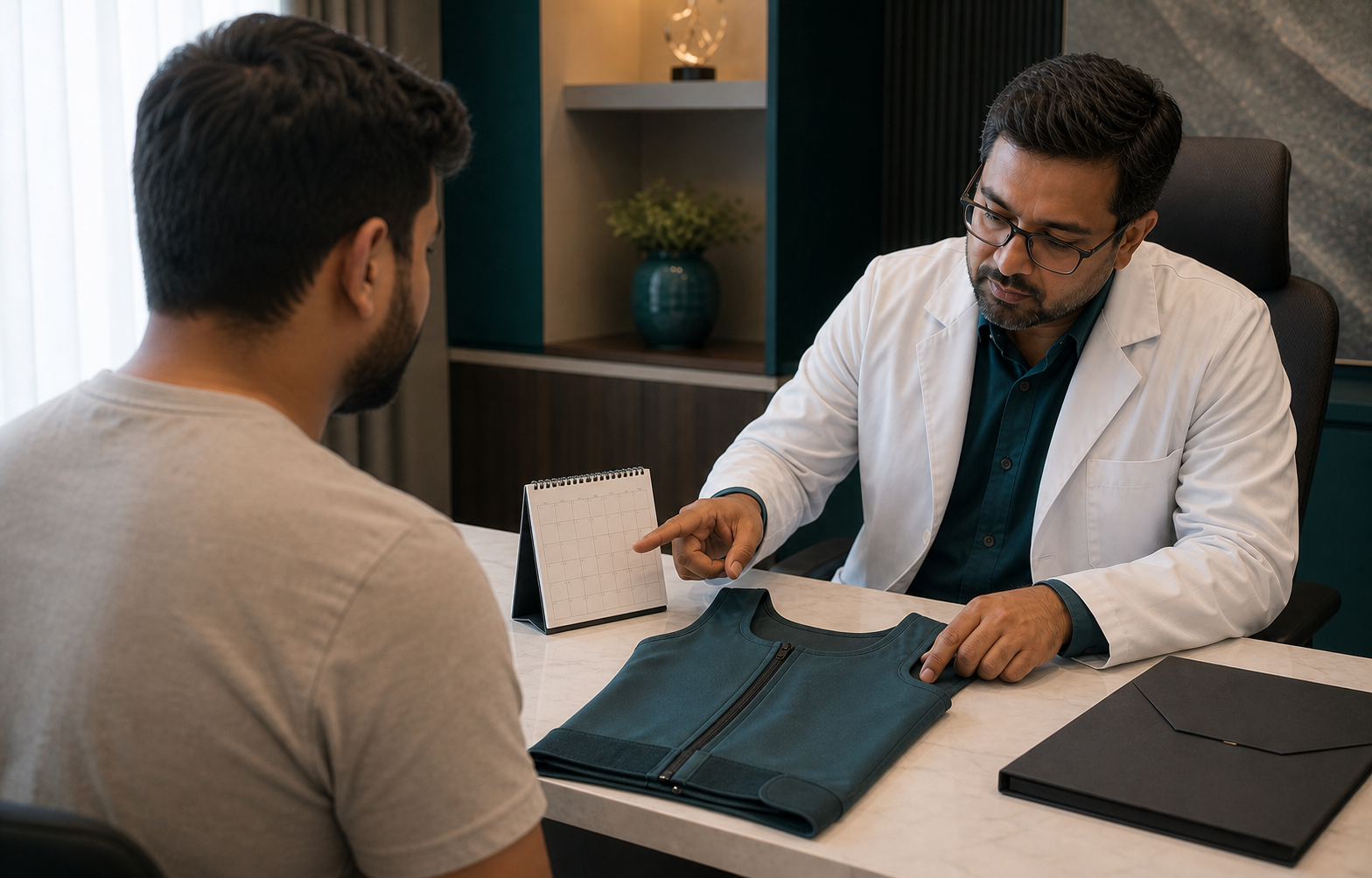
How your treatment plan is decided.
Five clinical decisions turn a concern into an individual treatment plan. Each step is explained before any procedure is recommended.

Transparent pricing
A clear range. An exact quote after examination.
Gynecomastia procedures are not one-size-fits-all. Your grade and the treatment plan confirmed during consultation determine the final cost.
Why a range?
Some cases need liposuction, while others also need gland excision or skin reduction. The technique changes the procedure cost.
Indicative procedure cost
₹75,000
–
₹1,25,000
A transparent range for planning, not an exact quotation.
Post-operative follow-ups
No additional charge
₹0
The final procedure fee is confirmed only after an in-person examination and treatment discussion.
Questions, answered
What men ask before they book.
Clear answers are useful. A proper examination is better. Your chest, skin and medical history decide what applies to you.
Still unsure where you fit?
Start the confidential check
01 How can I tell if it is gland tissue or just chest fat?
It is difficult to be certain from a photograph or mirror check. Gland tissue often feels like a firmer disc beneath the areola, while fat is usually softer and more spread out — and many men have both. A surgeon confirms this from your history and a physical examination, with tests only when the findings suggest they are needed.
02 Does every case of gynecomastia need surgery?
No. Puberty-related swelling can settle with time, weight loss may help when excess fat is the main issue, and a medicine or underlying health condition may need to be addressed first. Surgery is considered when confirmed gynecomastia persists and the symptoms or appearance continue to trouble you.
03 Which operation would I need?
That depends on what is creating the volume. Liposuction removes fat, excision removes firm gland tissue, and stretched skin may need tightening or reduction. Your grade is a useful starting point, but the final plan is made only after the surgeon examines the tissue and skin quality.
04 Will gynecomastia surgery leave visible scars?
Every surgical incision leaves a permanent scar. In lower grades, incisions can often be kept small and placed near the areola edge or at liposuction entry points. Higher grades that need skin removal require longer scars. Their likely position and trade-offs should be shown to you before you decide.
05 How long does recovery take?
Recovery varies with the operation, your work and how your body heals. Swelling, a compression garment and temporary limits on lifting or upper-body exercise are common. Your surgeon will give you separate timelines for desk work, driving and returning to the gym after examining you.
06 Can gynecomastia come back after surgery?
Removed tissue does not usually regrow, but the chest can change again with major weight gain, hormone changes, certain medicines, anabolic steroid use or an untreated underlying cause. No result can be guaranteed, which is why identifying the cause and keeping your weight stable are part of planning.
07 When should I see a doctor rather than rely on a self-check?
Arrange a medical assessment if you notice a firm or one-sided lump, nipple discharge or bleeding, skin dimpling or redness, or pain that does not settle. These signs do not automatically mean something serious, but they should be examined rather than graded from an online guide.